The High Opportunity Costs of Timing the Steel Market
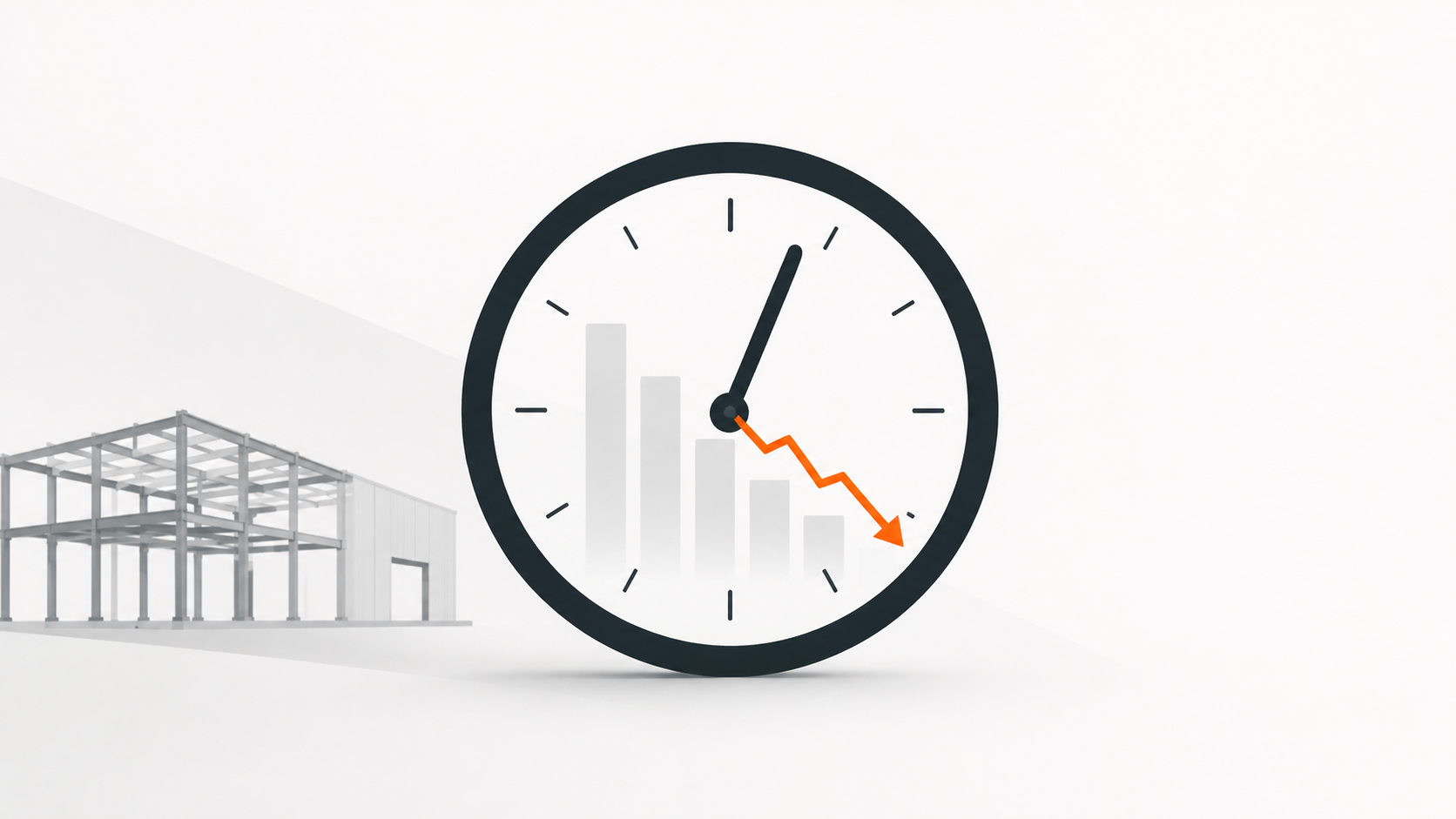
Waiting for steel prices to fall can cost more than it saves when lead times, production capacity, crews, and operational revenue are already under pressure.
Article brief
Waiting for steel prices to fall can cost more than it saves when lead times, production capacity, crews, and operational revenue are already under pressure.
Start a quote request
Share dimensions, use case, and site notes so our team can respond with practical next steps.
View real builds
Compare finished buildings by size, use, location, and project scope.
Use the resource hub
Move from article-level context into deeper planning guides and technical explainers.
Waiting for steel prices to drop before moving forward on a project is one of the most expensive decisions a builder can make, and it often gets mistaken for prudence. I am clearly incentivized to say that. I also say it after navigating a great recession, barely keeping my head on my shoulders through a global pandemic, and having my hand in nearly 10,000 completed metal building projects. I can wear both the confidence and the bias honestly.
Over the past two decades, I have led, trained, and coached many hundreds of metal building sales reps. One of the first questions we teach a new rep to ask every prospective customer is, "How long have you been thinking about doing this?" The answer is almost always some version of "years" or "decades." It became so predictable that it turned into a core tenet of our sales strategy, because it opens a candid conversation about the topic I am writing about today: the commodity trap.
The commodity trap is simple: builders fixate on material costs while ignoring the demand signals that determine total project cost and opportunity loss.
The confusion comes from treating steel like a stock ticker. Prices move, so people wait. But industrial steel building market trends tell a different story than the spot price chart. What is happening in the U.S. right now is not a typical pricing cycle. It is structural demand, and those two things do not behave the same way. Cyclical pricing fluctuates with quarterly sentiment. Structural demand is driven by reshoring, energy infrastructure, and federal spending commitments that do not reverse on a slow quarter. As Nippon Steel noted, the U.S. is the only market in the world where steel demand is expected to grow steadily, backed by our nation's renewed appetite for controlling both the inputs and outputs of our own economy.
When demand is structural, the variables that kill a project are not the ones on the material invoice. They are lead times, crew availability, and site access, none of which improve while you wait for a price dip. Builders who understand how steel buildings pencil out financially already know that material cost is one line item. Delay compounds every other line. The sections ahead explain what is driving that pressure, starting with an $8.5 billion bet that says a lot about where this market is heading.
What the $8.5 Billion Arcosa Acquisition Means for Your Lead Times
When billion-dollar players start locking up supply chains, private project owners feel it first and last.
A major acquisition in the industry is not a headline to skim past. It is a signal. One of the largest building materials companies on the planet just made a major bet that U.S. infrastructure demand is not slowing down. It is accelerating. The Wall Street Journal reported that CRH agreed to acquire Arcosa in a deal valued at roughly $8.5 billion, including debt. The move positions CRH closer to aggregates, infrastructure materials, and engineered products before another long run of federally funded and utility-driven work hits full stride.
Here is what that consolidation means for someone trying to scope and sequence a private project:
- Supply chain concentration: Fewer independent suppliers means less flexibility and fewer opportunities to find competitive pricing windows.
- Regional tightening in the South and Southwest: These high-growth markets are already strained. Large infrastructure players will absorb available capacity first.
- Crew competition: Infrastructure contracts pull experienced erection crews away from private work, which means longer lead times and higher subcontractor rates.
- Material prioritization: Fabricators serving DOT, utility, and energy contracts schedule those commitments ahead of commercial and agricultural builds.
The calculus on waiting for steel prices vs lost production revenue shifts entirely when supply chains are being restructured around infrastructure at scale. A price dip means nothing if your lead time stretches from 10 weeks to 22.
Big capital is preparing for a decade of activity. The question is not whether demand is real. It is whether your project is positioned ahead of it or behind it. The next section explains who your metal building is now competing against for raw materials, and the answer may surprise you.
The Data Center Surge: Your Building's New Competition
Commercial metal building demand does not exist in isolation. It is being reshaped by industries that barely registered as competitors five years ago.
Industry projections continue to show steep data-center growth, driven by AI infrastructure, cloud expansion, and the raw computational muscle modern technology requires. A 2026 research paper on AI data-center siting projects that electricity demand from leading AI operators' data centers could rise from roughly 118 TWh in 2024 to between 239 and 295 TWh by 2030, with a 13% to 17% compound annual growth rate. That kind of load growth does not happen in glass and concrete alone. It requires steel, structural systems, metal roofing, wall panels, power infrastructure, and the same fabricated components your warehouse or commercial facility needs.
Energy transition compounds it further. Utility-scale solar, battery storage, transmission, substations, and grid-hardening projects all consume structural steel at a scale that creates a consumption floor. That baseline level of demand does not recede just because broader economic conditions soften.
The market reality: Tech giants and utility companies are not price-sensitive the way private owners are. They build on schedule. They measure success in uptime and production. That keeps mill order books full and gives fabricators every reason to hold firm on pricing.
If you are still trying to plan around perfect conditions, understand this: the market is not waiting for your project to be ready. It is already moving.
Why Capacity Is the Thread That Connects These Trends
This is where the argument can feel like it jumps from market news to jobsite pain, but the thread is straightforward: capacity is finite.
Steel mills have finite production slots. Fabricators have finite detailing and shop capacity. Experienced erection crews have finite calendars. Freight carriers, concrete contractors, permit reviewers, and utility coordinators do too. A private building owner is not only buying a steel package. They are trying to reserve a place in a crowded sequence of labor, materials, approvals, and delivery windows.
That is why price timing can fail even when the buyer guesses the commodity market correctly. A small material discount can be erased quickly if the project loses its place in line. The COVID lead-time spike made that lesson painfully visible.
The Hidden Cost of Delay: Lessons from the COVID Lead-Time Spike
Waiting for a better price is a strategy. It is just not always a good one, and history is blunt about the consequences.
If you were looking into standing up a pre-engineered metal building in 2021 or 2022, you already know how fast metal building lead times increased. What had been a reliable 12-week window from order to delivery ballooned past 50 weeks across many parts of the industry. At Great Western Buildings, where I held the VP of Marketing role at the time, our lead times exceeded 12 months in some cases. That is a full calendar year of your project sitting in a queue while your business operates in the same constrained square footage it always did.
Demand was through the roof. We could not find a price point the market was unwilling to bear. The combination of boredom, an overstimulated economy, and the sudden halt of global production created a perfect storm: extreme demand paired with extraordinary shortages in supply.
The real damage was not only the price increase. It was the double hit: paying more for materials and losing a year of productive capacity.
Consider what that actually costs. A contractor who needed a new fabrication shop to take on larger contracts did not just wait. They turned away work. A distributor who needed warehouse expansion sat on inventory they could not move efficiently. Lost revenue during that delay is not theoretical; it compounds. No building means no production, no storage, no growth. The price of steel is a line item. Lost opportunity cost is a multiplier, and it does not show up on any metal building erector quote sheet.
| Condition | 2019 (Pre-Spike) | 2021-2022 (Peak Spike) |
|---|---|---|
| Typical lead time | 10-14 weeks | 40-52 weeks |
| Steel price index | Baseline | Up ~150% YoY |
| Project delay risk | Low | Extremely high |
The warning here is not historical trivia. Current demand signals, including data center construction, infrastructure spending, and supply chain consolidation, echo the early conditions that preceded that spike. The buyers who came out ahead in 2021 were not the ones who timed the market. They were the ones already in the queue. That distinction matters more now than most buyers realize, and it connects directly to readiness.
Why Project Readiness Trumps Market Timing
Chasing the perfect steel price while ignoring project coordination is how good projects become delayed ones, and delayed projects usually cost more than a minor price correction could save.
The commodity steel model misses the point entirely. Steel is a material. Your building is a system: engineered drawings, site permits, utility coordination, foundation specs, delivery timing, and a slot in a manufacturer's production queue. None of those elements respond to spot market pricing. What usually happens is that buyers fixate on a $2,000 swing in material cost while their project sits unscheduled, their contractor stays unbooked, and their timeline drifts six to eight months further out. That is not savings. That is opportunity cost with a price tag most people never calculate.
Context-aware planning is the practical alternative. It means locking in your design, your site conditions, and your production position before market volatility forces your hand. If you are genuinely asking whether now is a good time to buy a metal building, the honest answer is this: the right time is when your project is ready to move, not when a chart looks favorable. Understanding what your build will actually cost matters far more than speculating on a commodity index. Professional project management is the real hedge here. It protects against lead-time exposure, coordination gaps, and the compounding cost of starting late.
The Bottom Line: Is Now the Time to Build?
Waiting for a price drop that may never come is a bet against your own project's momentum, and the math rarely works in your favor.
Here is the calculation most buyers do not run: a 5% reduction in material costs can easily be wiped out by 20% in lost annual revenue from a delayed operational start. The building that sits unbuilt while you track commodity indexes is not saving you money. It is costing you the income that building was supposed to generate.
The demand side of this market is not softening in any simple way. Industrial construction, driven by data centers, energy infrastructure, and domestic manufacturing reshoring, has changed who is competing for fabrication capacity. These are not seasonal projects. They are multi-year programs with deep pockets and locked-in schedules. When they absorb production slots, smaller buyers feel it in lead times, not just price quotes.
Lead times are the real ROI risk. Material costs fluctuate within a band. A six-month delay to your occupancy date is a straight-line hit to revenue, lease income, or operational capacity. Understanding what is actually involved, from site drainage and prep work to final occupancy, makes clear why the clock starts well before steel gets ordered.
The most defensive move any buyer can make right now is securing a place in the production queue. Not because prices are perfect. Because your timeline is finite and the line behind you is long.
- Price timing is a distraction. Chasing a 5% dip while losing months of revenue is a net loss.
- Industrial demand has reset the baseline. Data centers and infrastructure programs are the new competition for fabrication capacity.
- Lead times outweigh material cost variance as a threat to project ROI.
- Queue position is your real leverage. Committing early protects your schedule when the market tightens.
The project that pencils out today will likely cost more to delay than to start. Choosing the right partner to manage that process end to end is what separates a delivered building from a stalled one.
Navigating the Mammoth Undertaking of Modern Construction
Modern construction is not a commodity purchase. It is a coordinated project, and the teams that treat it that way are the ones most likely to finish on time and on budget.
The shift from price-chasing to project management is the single most important mindset change you can make before breaking ground. Steel prices will fluctuate. Lead times will compress and stretch. What will not change is the cost of a stalled project, a missed occupancy window, or a contractor crew standing idle because materials did not arrive on schedule.
What you need is not the lowest quote on a steel package. You need a partner who manages the end-to-end process, from scope definition and site coordination through fabrication, delivery, and erection sequencing. That is the work that protects your budget. Whether you are planning a commercial facility or exploring steel options for a home project, the complexity is real, and it deserves a serious approach.
Mammoth.build is built around that model: not order-taking, but project navigation. The market is noisy, and the variables are real. But with the right partner managing the moving parts, the question stops being "should I wait for a better price?" and starts being "what is required to successfully execute this project?"
If your project needs pricing, install planning, or a path from scope to delivery, start with an install or turnkey steel building quote. Prioritize function, timeline, and coordination. The price works better when the project is managed right.
Last updated: June 23, 2026
Article topics
Compare the article to real metal building projects
Blog readers are often still forming a project direction. Our project gallery gives you concrete examples of building size, use case, and finished scope.
View All Projects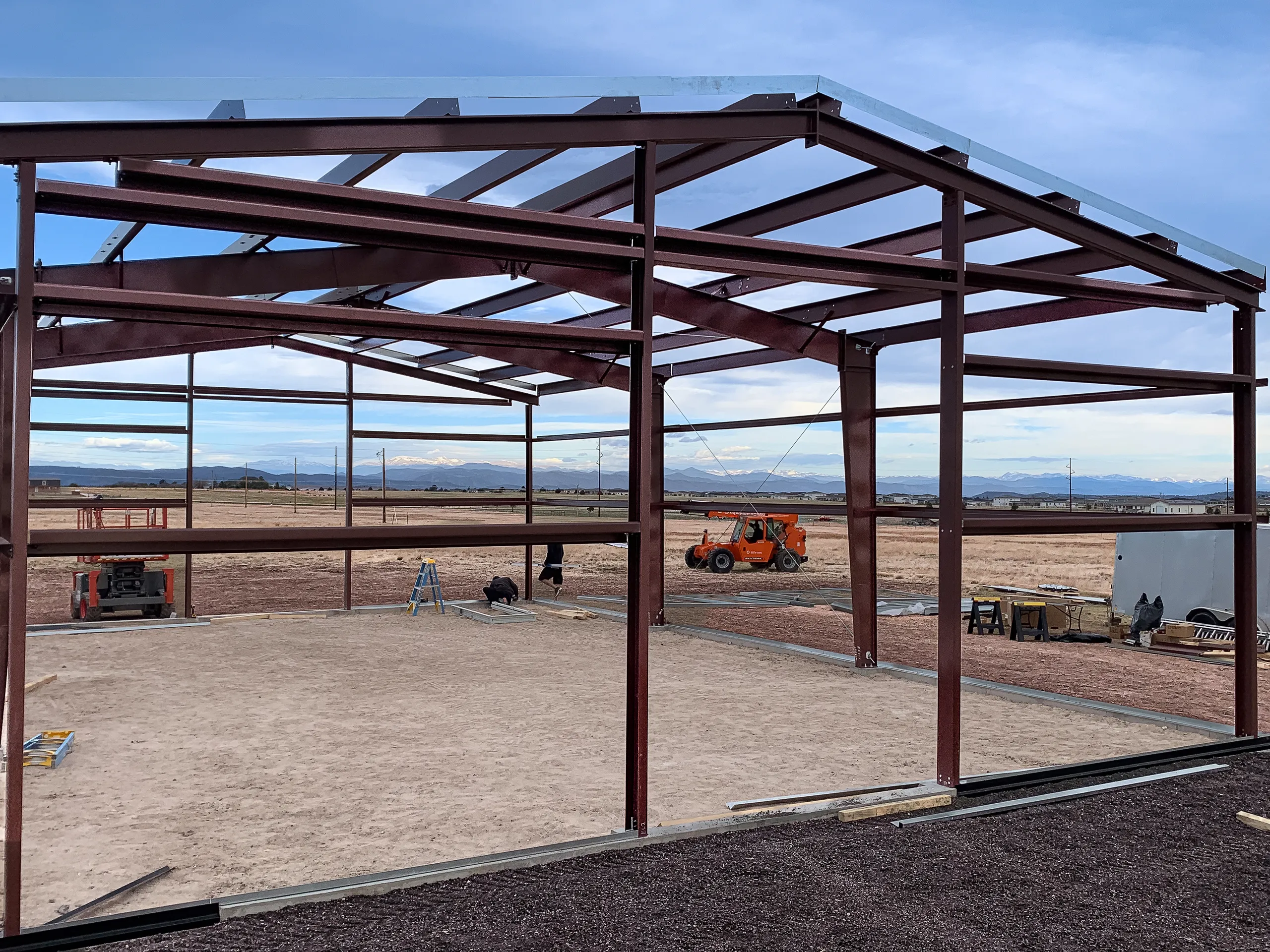
39x57x16 Horse Barn - Castle Rock, Colorado
Planning a steel building and want real numbers?
Send the basics and Mammoth will help connect the article-level guidance to dimensions, site needs, and quote-ready decisions.
Related Articles
Continue reading with these related insights.
5 Key Considerations When Planning Your Metal Building
Planning a metal building project? Here are the essential factors you need to consider before breaking ground.
Read More