Understanding Metal Building Warranties and What They Cover
A comprehensive guide to metal building warranties and how to protect your investment.

Article brief
A comprehensive guide to metal building warranties and how to protect your investment.
Start a quote request
Share dimensions, use case, and site notes so our team can respond with practical next steps.
View real builds
Compare finished buildings by size, use, location, and project scope.
Use the resource hub
Move from article-level context into deeper planning guides and technical explainers.
Buying a metal building is a decision meant to last for decades. The warranty behind it is one of the most important parts of that decision, and it is also one of the most misunderstood. Too often it goes unread, taken for granted, or assumed to cover more than it actually promises.
This guide walks through the main warranty types, what they typically cover, what commonly voids them, and how to keep your coverage intact. Your own warranty documents are always the final word, so read them carefully and keep them somewhere safe.
1. The Three Core Warranty Categories
Most manufacturers separate their coverage into three parts: the structural frame, the panels and their coating, and the fasteners. Each part carries its own terms, its own length, and its own conditions.
Structural Frame Coverage
This is usually the longest coverage on the building, and it often runs for decades. The exact length depends on the manufacturer and the product, so check the warranty document for the terms that apply to your building.
Typically covers:
- Columns, rafters, rigid frames, and the members that carry the load
- Structural failure traced to an engineering or manufacturing defect
Typically does not cover:
- Improper installation
- Foundation failure
- Unapproved changes made in the field
- Acts of nature such as tornadoes, earthquakes, and hurricanes
- Loading the building beyond its engineered design
Ignoring the engineered drawings, making your own modifications, or swapping components partway through the build can void this coverage.
Panel and Coating Coverage
Typically covers:
- Paint adhesion
- Stated limits on chalk and fade
- Panels rusting through
This coverage usually depends on the panels being handled and installed correctly. Common conditions include:
- No fasteners driven in too deep
- Correct cutting methods, with abrasive saws avoided unless the manufacturer allows them
- No unapproved chemicals or corrosive washdowns
- Every cut sealed, and metal shavings (the trade calls them swarf) cleaned off
Careless handling can undo coating coverage quickly. Grinding sparks, loose metal shards, and the wrong cleaners can all cause damage the warranty will not cover.
Fastener Coverage
Fasteners are coated and matched to the panel system they ship with. This coverage is commonly voided when:
- The wrong screws are used
- Fasteners are driven too deep or not deep enough
- They are mixed with incompatible metals
- A crew substitutes whatever hardware happens to be on hand
When fastener coverage is voided, the panel coverage often goes with it, because the two are designed to work together.
2. The Fine Print Buyers Miss
Most denied claims come down to simple, preventable mistakes. Common exclusions include:
- Improper installation or unauthorized field cutting
- Modified structural members
- Welding done in the field that never appeared on the engineered drawings
- Standing water or clogged gutters
- Skipped routine upkeep
- Treated lumber or incompatible metals left in contact with the steel
The point is straightforward. A building can be engineered well and fabricated well, and the coverage can still lapse if the crew does not follow the specifications.
3. Maintenance Is Part of the Deal
A warranty is not a set it and forget it document. Manufacturers generally expect ongoing care, and neglect can give them a legitimate reason to decline a claim. Typical expectations include:
- Regular inspections
- Clearing debris from the roof and gutters
- Sealing and treating scratches before they spread
- Resealing penetrations and openings
- Checking whether fasteners have loosened or backed out over time
4. Documentation Is Your Safety Net
If you ever file a claim, your records often decide the outcome. Keep:
- Engineering drawings and stamped plans
- Delivery receipts and material inventory
- Photos taken once erection is complete
- Warranty certificates
- All maintenance records
- Your contractor's contact and licensing information
If it is not documented, it is hard to prove. Save everything from the start.
5. How Mammoth Helps You Protect Your Coverage
The warranties on your building are issued by the manufacturers who make its parts, and their documents set the terms. Mammoth does not replace those warranties. What we do is help you keep the coverage you are entitled to, because a lot of lost coverage traces back to installation and upkeep, not the steel itself.
We:
- Work to match the engineering to your local loads and code requirements
- Connect you with proven erection crews who build to the drawings
- Provide written maintenance guidance
- Walk you through the warranty terms before you buy, so you know what to expect
- Help you organize your documentation and point you in the right direction if you ever need to file a claim
We cannot promise the outcome of a claim, and no honest company can. What we can do is help you start with sound engineering, a careful install, and clear records, which is what keeps a warranty worth having.
Final Word
A metal building warranty is not fine print to skim past. It sets the terms of your coverage, and it rewards owners who understand it and follow it.
Read the terms.
Keep the paperwork.
Choose crews who build to the drawings.
When a building is engineered, installed, and maintained the way its warranty requires, that coverage does what it is meant to do: stand behind the building for the long run.
Compare the article to real metal building projects
Blog readers are often still forming a project direction. Our project gallery gives you concrete examples of building size, use case, and finished scope.
View All Projects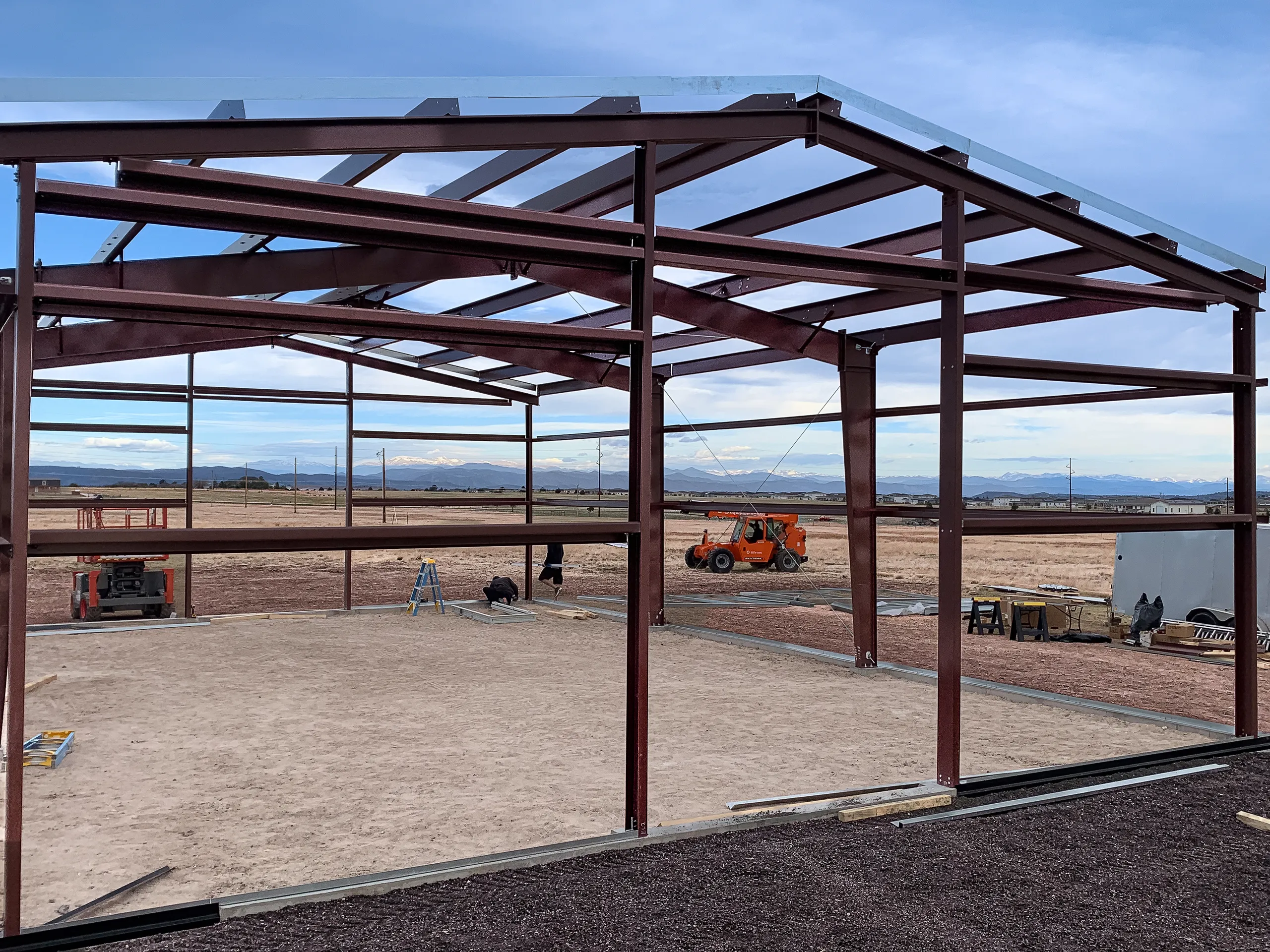
39x57x16 Horse Barn in Castle Rock, Colorado
Planning a steel building and want real numbers?
Send the basics and Mammoth will help connect the article-level guidance to dimensions, site needs, and quote-ready decisions.
Related Guides
Use these evergreen resources to turn the article into next-step planning decisions.
Metal Roof and Wall Panel Installation
What matters during panel installation if you want the roof and wall system to perform instead of just look finished.
Metal Building Glossary
Plain-language definitions for common metal building terms used in quotes, drawings, and planning conversations.
Metal Building Project Planning
A practical planning framework for moving from rough idea to buildable scope before pricing, engineering, and site work begin.
Browse the Roof & Wall Systems topic hub
Move from this article into a tighter collection of evergreen guides built around the same planning decision.
Browse the topic hub